The NO FAKES Act Gets Its Strongest Push Yet: A Revised Bill, Senate Judiciary Vote, and a Ticking Clock
A bipartisan coalition spanning labor, tech, and entertainment is pushing harder than ever for a federal likeness right, but the clock is running.
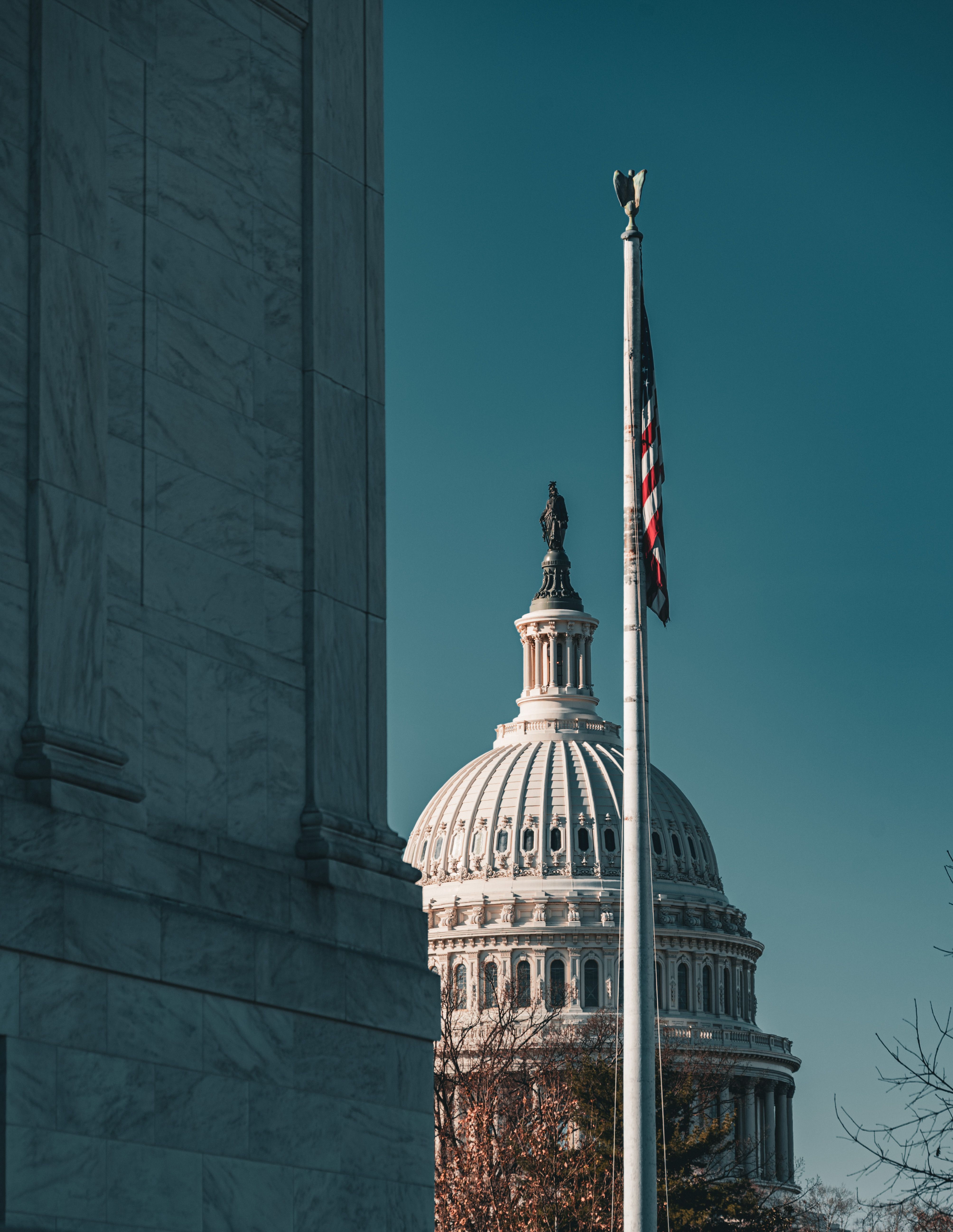
之吟 许 (Pexels)
Imagine discovering your voice, your actual voice, has been used to sell a product you never endorsed, in a state whose right-of-publicity law offers you no remedy. That is not a hypothetical. It is the legal reality for millions of working performers today. A revised federal bill introduced in May 2026 is the most serious attempt yet to change that.
What Just Happened
In May 2026, a revised and expanded NO FAKES Act was reintroduced in both the Senate and the House. According to the press release from Senator Marsha Blackburn's office, the bill was introduced by Senators Blackburn and Chris Coons alongside Representatives Salazar and Dean, with a notably broader coalition of co-sponsors than previous versions. Senator Coons described it as 'the most advanced piece of AI legislation before Congress right now,' a signal of how seriously this session's sponsors are treating it.
The coalition behind the 2026 version is what makes political observers pay attention. The AFL-CIO has now added its support, joining Google and YouTube, OpenAI, IBM, the Motion Picture Association, and the RIAA, according to Wikipedia's legislative history of the No Fakes Act. That alignment, organized labor standing alongside major AI developers and entertainment trade groups, is unusual and reflects the kind of cross-sector pressure that tends to move legislation.
In the same legislative window, the Senate Judiciary Committee unanimously approved bipartisan deepfake legislation. A U.S. News report published June 23, 2026 confirms the Senate 'could soon vote' on related measures, though the report is careful not to promise passage before the 2026 election calendar tightens.
What the Bill Would Actually Do
The text of H.R.2794, the NO FAKES Act of 2025, is available through Congress.gov. The bill would create a federal intellectual property right over an individual's voice and visual likeness, covering both living persons and deceased individuals. That last point matters: the estates of performers whose likenesses have been reproduced by AI systems currently have uneven legal footing depending on which state laws apply.
The bill establishes a cause of action against anyone who produces, hosts, or shares an 'AI-generated replica' of a person's voice or visual likeness without consent. It assigns liability not only to the creator of a replica but, under certain conditions, to platforms that host it. The legislative text also carves out safe harbors (for news reporting, commentary, parody, and similar uses) in an attempt to address First Amendment concerns that critics raised about earlier drafts.
Critically, the bill is designed to function as a federal floor, replacing the existing patchwork of state right-of-publicity laws with a single national cause of action. Which state protections survive the preemption provisions is, according to Wikipedia's account of the bill's legislative history, still the sharpest legal debate among stakeholders.
Why the Preemption Fight Is the Real Story
Right-of-publicity law currently varies enormously by state. California and New York have robust protections; many other states have minimal or no statutory frameworks. A performer based in Tennessee, a musician recording in Georgia, a voice artist working remotely from a state with no publicity statute, each faces a different legal landscape today.
Federal preemption would end that disparity, but it cuts both ways. States with stronger existing protections, like California, have constituencies worried that a federal baseline might actually weaken what they already have. This tension between floor and ceiling (does federal law raise everyone up, or does it cap what stronger states can do) is not resolved by coalition press releases. It will be resolved in markup, in floor amendments, or eventually in court.
The Clock Problem
The U.S. News analysis from June 23, 2026 frames the Senate's posture carefully: the chamber 'could soon vote' on related AI measures, but the 2026 midterm election calendar compresses the available legislative calendar considerably. Bills that do not advance before Congress pivots to campaign season historically face a difficult path to resurrection in the following session, often requiring reintroduction and a fresh round of coalition-building.
That dynamic creates real urgency for the entertainment and labor groups that have invested in this version of the bill. The AFL-CIO's entry into the coalition is partly a reflection of that urgency: organized labor representing performers, musicians, and media workers wants a federal right established before the window closes.
Why It Matters to You
If you work in front of a camera, behind a microphone, or in any creative capacity where your voice or likeness is a professional asset, the current legal situation is genuinely unequal depending on your geography. A federal likeness right would mean that consent (your affirmative, documented consent) becomes the legal requirement everywhere in the United States, not just in states that have gotten around to passing their own laws.
For performers whose work takes them across state lines, whose recordings circulate on national platforms, and whose AI-generated replicas can be produced and distributed globally in minutes, a patchwork of 50 different legal standards is not a workable protection. The NO FAKES Act, if enacted, would change that calculus fundamentally.
The honest caveat is that 'introduced with strong coalition support' and 'passed into law' remain very different things. The unanimous Senate Judiciary Committee vote on related deepfake legislation is a meaningful signal, but the full Senate floor and any conference with the House represent distinct hurdles. What is clear is that this is the furthest a federal likeness rights bill has traveled, and the debate it is forcing, about consent, compensation, and the ownership of one's own face and voice, is not going away regardless of what happens in this session.
For anyone whose livelihood depends on how their likeness is used, maintaining a clear, timestamped record of what you have and have not authorized is foundational, not because any single tool resolves a legal dispute, but because documentation is what turns a claim into evidence when it matters.
Sources
- Blackburn, Coons, Salazar, Dean, Colleagues Introduce Revised Version of NO FAKES Act · https://www.blackburn.senate.gov/2026/5/technology/blackburn-coons-salazar-dean-colleagues-introduce-revised-version-of-no-fakes-act
- No Fakes Act — Wikipedia (legislative history and coalition detail) · 2
- Text - H.R.2794 - 119th Congress (2025-2026): NO FAKES Act of 2025 · https://www.congress.gov/bill/119th-congress/house-bill/2794/text
The Likeness Ledger is informational reporting and analysis, not legal advice. It does not create an attorney–client relationship. For decisions about your specific situation, consult a qualified professional.