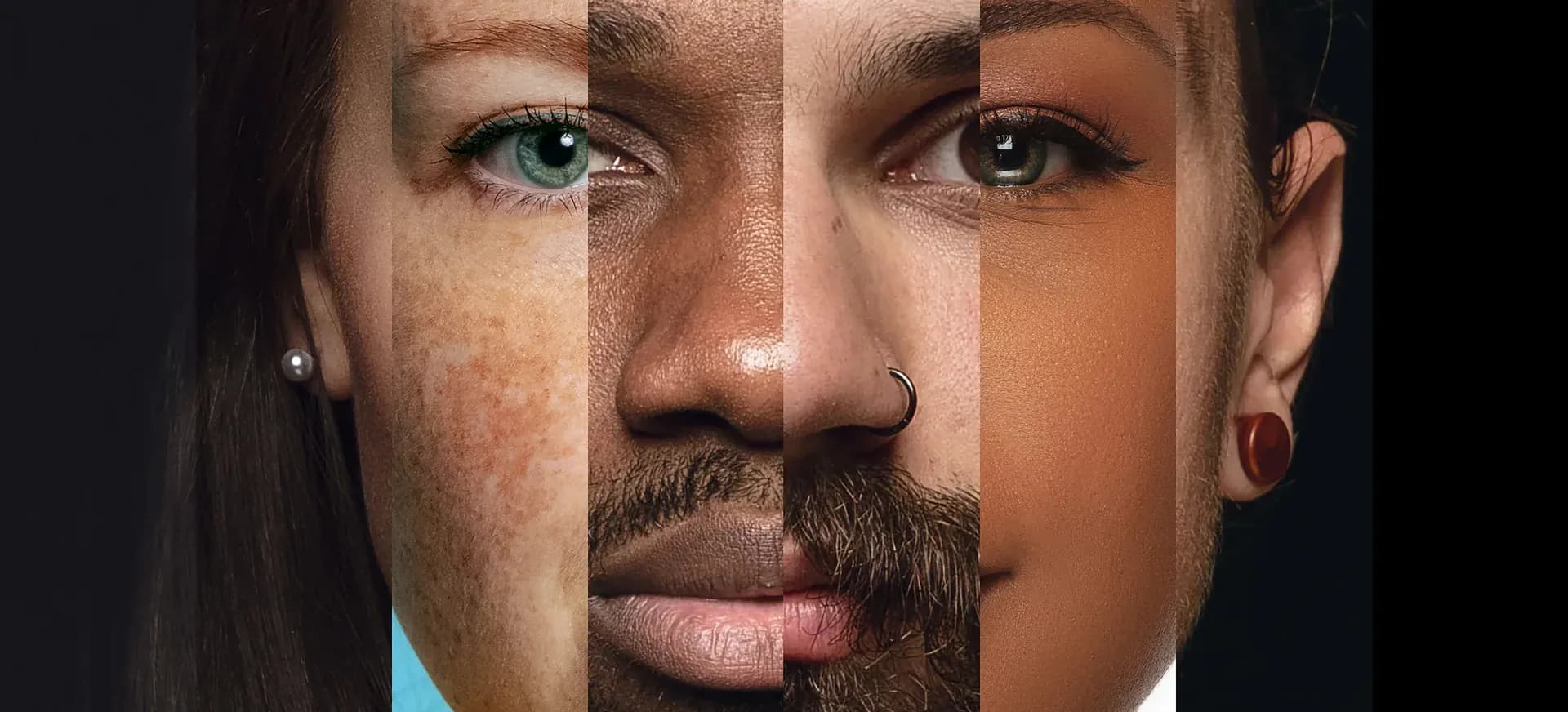
We called it AURA.
Authenticated Universal Rights Architecture — because each word is a promise.
Authenticated. Every identity here is verified, never assumed.
Universal. Protection shouldn't depend on whether you're famous, which craft you work in, or where you live.
Rights. Your likeness is yours by default, not by petition.
Architecture. Infrastructure built to outlast any single fight — not a feature bolted on after the harm's already done.
Identity is not a resource to be mined.
For most of your life, your likeness went where you went. It could be photographed, drawn, recorded — but it couldn't be manufactured. That's no longer true. A voice can be cloned from a podcast. A face can be rebuilt from a handful of posts. A performance can be generated by a machine that never met you.
We don't accept the idea that because something canbe copied, it's free for the taking. Your identity isn't training data. It isn't raw material. It's the most personal thing you have — and we think ownership should actually mean something.
Protection should not depend on how famous you are.
The biggest names have lawyers, agents, and the leverage to make platforms listen. Everyone else has a contact form and a prayer. When the same threat reaches a working voice actor, an indie musician, or a creator with a devoted audience, the tools simply aren't there.
That asymmetry is the problem we exist to close. The same caliber of protection the powerful take for granted should belong to every artist — not as a favor, but as a right that is practical, affordable, and real.
Consent should be provable, not promised.
The internet runs on assurances that vanish the moment they're inconvenient. “We had permission.” “It was licensed.” “We didn't know.” For the person whose likeness is in question, a promise is worthless without proof — and for the company that licensed it in good faith, a promise is a liability without a record.
We think consent should be something you can point to — verifiable, specific, and durable enough to stand on its own. When consent is provable, the artist is protected and the honest buyer is too. A studio can license a voice and know the permission is real. An AI company can source a likeness and stand behind it. The artist gets protection; the buyer gets confidence. Everyone who plays fair comes out ahead.
We're not building a place to speculate.We're building the infrastructure for a world where AI and human creativity can coexist — where artists are protected, honest work is rewarded, and anyone who wants to create responsibly finally can. On terms that respect the human.
Transparency is not a feature. It's the deal.
Most platforms ask you to hand over your most sensitive data and trust that something reasonable happens to it behind a curtain. We think that's backwards. If we're asking you to entrust us with your identity, the least we owe you is to show our work.
So we built AURA to be legible from the inside out. You should always be able to see what's happening with what's yours — what's protected, what's licensed, what's earning, and what's being challenged. Trust isn't something we ask for. It's something we try to earn, every time you log in.
Dignity is part of the product.
An artist's identity should be handled the way you'd want your own handled — with care, with respect, and without making them feel like a file in a queue. The experience of protecting yourself shouldn't feel clinical or cold. It should feel like someone is finally on your side.
We measure ourselves not only by what we protect, but by how it feels to be protected by us. That is not a soft concern. For the people we serve, it is the whole point.
The convictions behind everything we build.
Control belongs to the artist
Every decision about a person's likeness should rest with that person. Not their platform, not the highest bidder — them.
Proof beats promises
Permission only matters if it can be shown. We make consent verifiable so it protects both sides of every deal.
Worth flows to the source
When a likeness creates value, that value should reach the person it came from. Fairly, and without friction.
Nothing happens in the dark
Artists can always see what's theirs, where it's used, and how it's protected. Visibility is the default, not a setting.
Your likeness. Your rules.
Your revenue.
If any of this resonates, you're who we built AURA for.